

The Moment Boys Stop Asking Questions
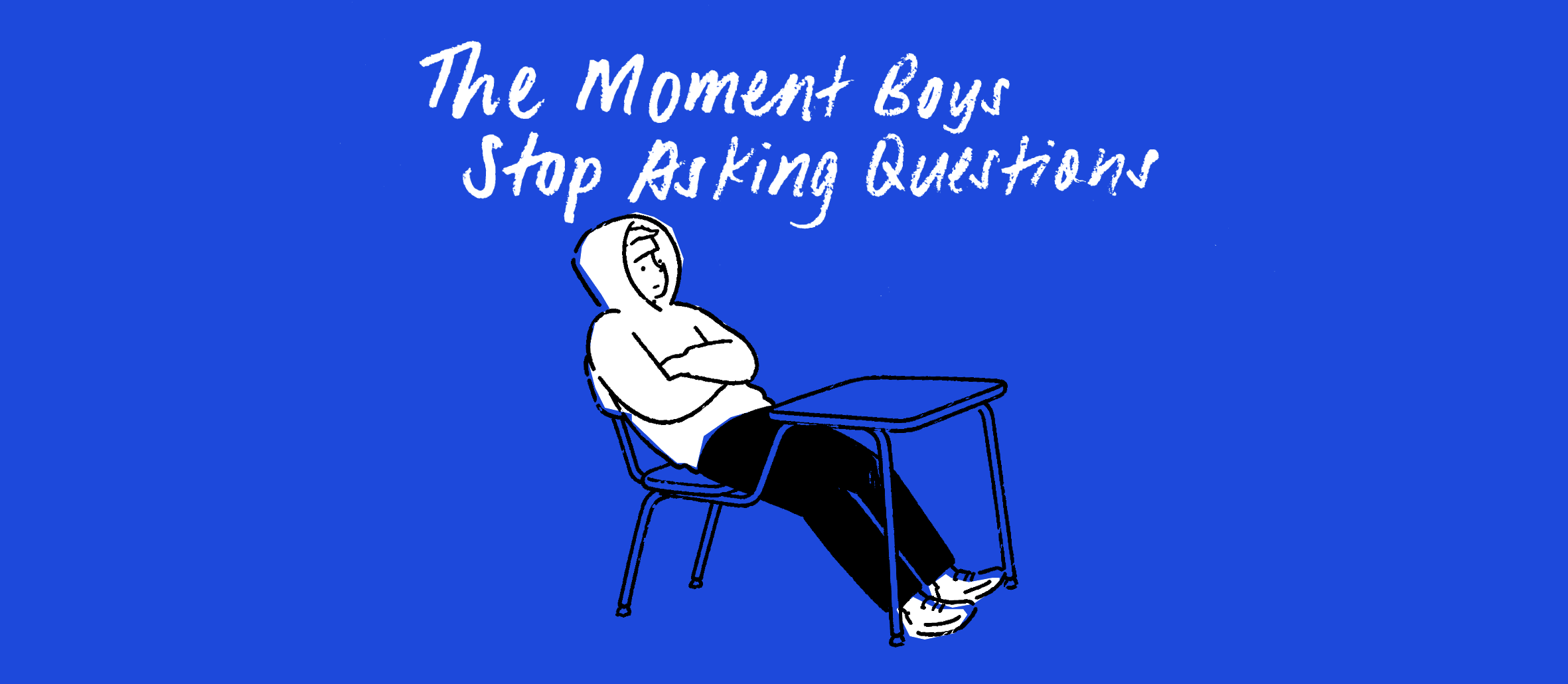
At some point during Year 10 English, one of my classmates disappeared.
Not literally — he still sat in the same seat, still walked into class with the same swagger, still had the confidence, the sense that he knew who he was.
But the version of him that was curious slowly vanished.
We weren’t especially close, but I always liked him. He had his own thing going on. He was cool and he was also smart. Properly smart. The kind of student who had interesting opinions and wasn’t afraid to challenge an idea or ask a question that shifted the conversation.
And that year, we had a brilliant English teacher. One of those teachers who could pull people into the learning process without forcing it. The class felt alive. People contributed. Discussions mattered. You could feel students beginning to find their voices.
Especially him.
At the start of the year, he was engaged in everything. Hand up. Asking questions. Offering opinions. Leaning into discussion.
Then, slowly, he stopped.
He stopped raising his hand.
Stopped asking questions.
Stopped contributing.
At 14 years old, I couldn’t have explained what I was seeing. I didn’t have the language for it yet.
But looking back now, I think I understand.
I think he started wrestling with a question a lot of boys wrestle with:
How smart is too smart before it stops being cool?
You could feel the tension in him. He wanted the swagger. Wanted the identity. Wanted to belong. And somewhere along the line, curiosity started to feel risky.
Because curiosity exposes you.
The moment you ask a question, you reveal that you don’t already know the answer. The moment you contribute an idea, you risk being wrong. The moment you engage deeply, you suddenly care — and caring can feel dangerous, especially as a teenager.
So instead, many people learn to withdraw.
Not because they’re incapable.
Not because they aren’t interested.
But because socially, disengagement can feel safer than enthusiasm.
That’s the part I still think about.
Why did it feel like he had to choose?
Why couldn’t he have swagger and curiosity?
The strange thing about curiosity is that it creates momentum incredibly quickly.
It rarely starts with some grand aha moment. Usually it starts with one question. Then another. Then another. Suddenly you’re engaged. Invested. Looking things up after class. Seeing connections. Building confidence. Wanting to explore it further.
Learning has momentum when curiosity is present.
But the reverse is true too.
Once someone starts suppressing their curiosity — starts editing themselves, stops asking questions, stops risking being seen trying — the momentum disappears just as quickly.
That’s why curiosity matters so much.
Not because it makes people sound smart.
Not because schools tell us it’s important.
But because curiosity is often the gateway skill.
It’s the thing that unlocks learning in the first place.
It’s why we built curiosity into the heart of what we do at TOOLKT. It’s one of the 8 Essential Skills we teach because it sits underneath so much else — confidence, communication, problem solving, creativity, growth.
None of those things really happen without the willingness to ask questions first.
The older I get, the more I realise the people who continue growing aren’t necessarily the smartest people in the room.
They’re the people who keep finding the courage to stay curious.
Dave